Industrial Palletizer for Adhesive Production Lines
MIC Machinery provides Palletizer solutions designed for automated stacking and handling of adhesive cartridges, containers, cartons, and other packaged products. The equipment improves warehouse preparation and production line efficiency through precise pallet loading, stable movement control, and flexible stacking configurations for different packaging requirements.
Manufacturing Process
The manufacturing process of a Palletizer involves engineering design, mechanical fabrication, automation integration, and performance testing. MIC Machinery focuses on structural accuracy and control reliability to ensure stable palletizing operations in industrial environments.
1)Design and Fabrication
Engineers design the palletizing system according to product size, pallet pattern, load capacity, and production speed. Key components such as frames, conveyors, and positioning units are precisely manufactured for stable operation.
-----
2)Mechanical Assembly
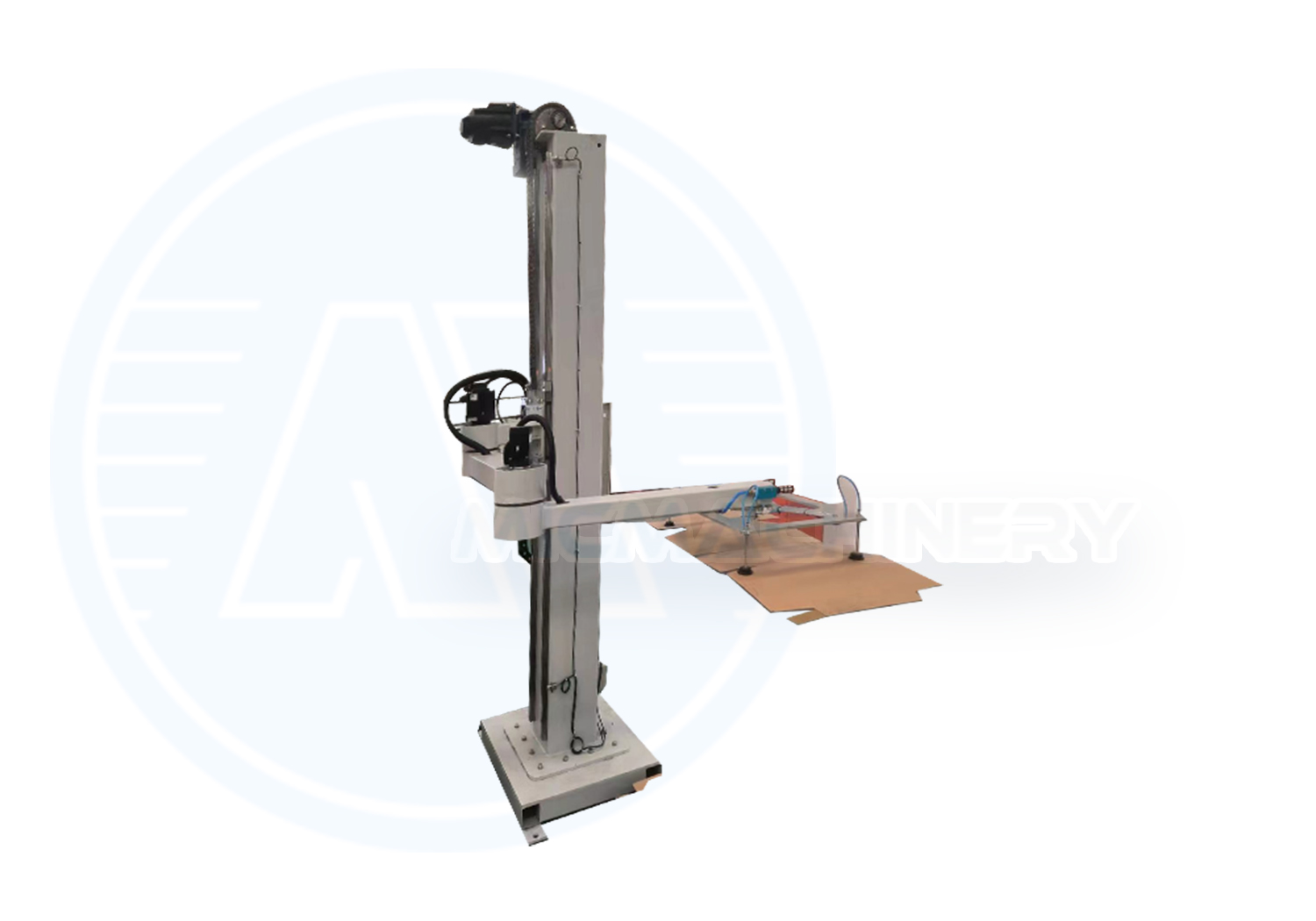
The palletizer is assembled with conveyors, grippers, lifting systems, and positioning devices. The handling system is customized for different adhesive packaging formats, ensuring accurate product transfer and stacking.
-----
3)Control System Integration
PLC, sensors, servo drives, and HMI systems are integrated to control palletizing sequences, movement parameters, and safety functions according to production requirements.
-----
4)Testing and Adjustment
The machine is tested for stacking accuracy, handling stability, and continuous operation. Parameters such as gripping force, speed, and stacking patterns are adjusted based on product samples.
-----
5)Final Inspection
Before delivery, each Palletizer undergoes mechanical and electrical inspection, production simulation, and functional testing. Technical documents are prepared for installation and commissioning.
Technical Advantages
➢ Precise Stacking Performance
The Palletizer uses accurate motion control systems to achieve consistent product positioning and stable pallet patterns. This helps maintain neat stacking and improves transportation safety.
➢ Flexible Product Handling
The system can be configured for different adhesive packaging formats, including cartons, pails, drums, and containers. Customized grippers and conveyors allow the equipment to adapt to various product weights and dimensions.
➢ Automated Production Integration
The palletizer can be connected with filling machines, carton packing machines, conveyors, and warehouse systems to create a continuous packaging workflow. This reduces manual handling and improves overall production efficiency.
➢ Intelligent Control System
PLC-based control allows operators to manage palletizing programs, adjust stacking parameters, and monitor equipment status. Multiple pallet patterns can be stored for different product specifications.
➢ Stable Mechanical Design
Industrial-grade components and precise manufacturing ensure reliable performance during continuous operation. The structure is designed to handle repetitive movements while maintaining positioning accuracy.
➢ Improved Workplace Efficiency
Automatic palletizing reduces physical labor requirements and provides a safer working environment, especially in production areas handling heavy cartons or bulk adhesive products.
Customization Options
MIC Machinery offers customized Palletizer configurations based on different adhesive production and packaging requirements. Solutions can be designed according to product type, pallet size, stacking height, production speed, and available factory space.
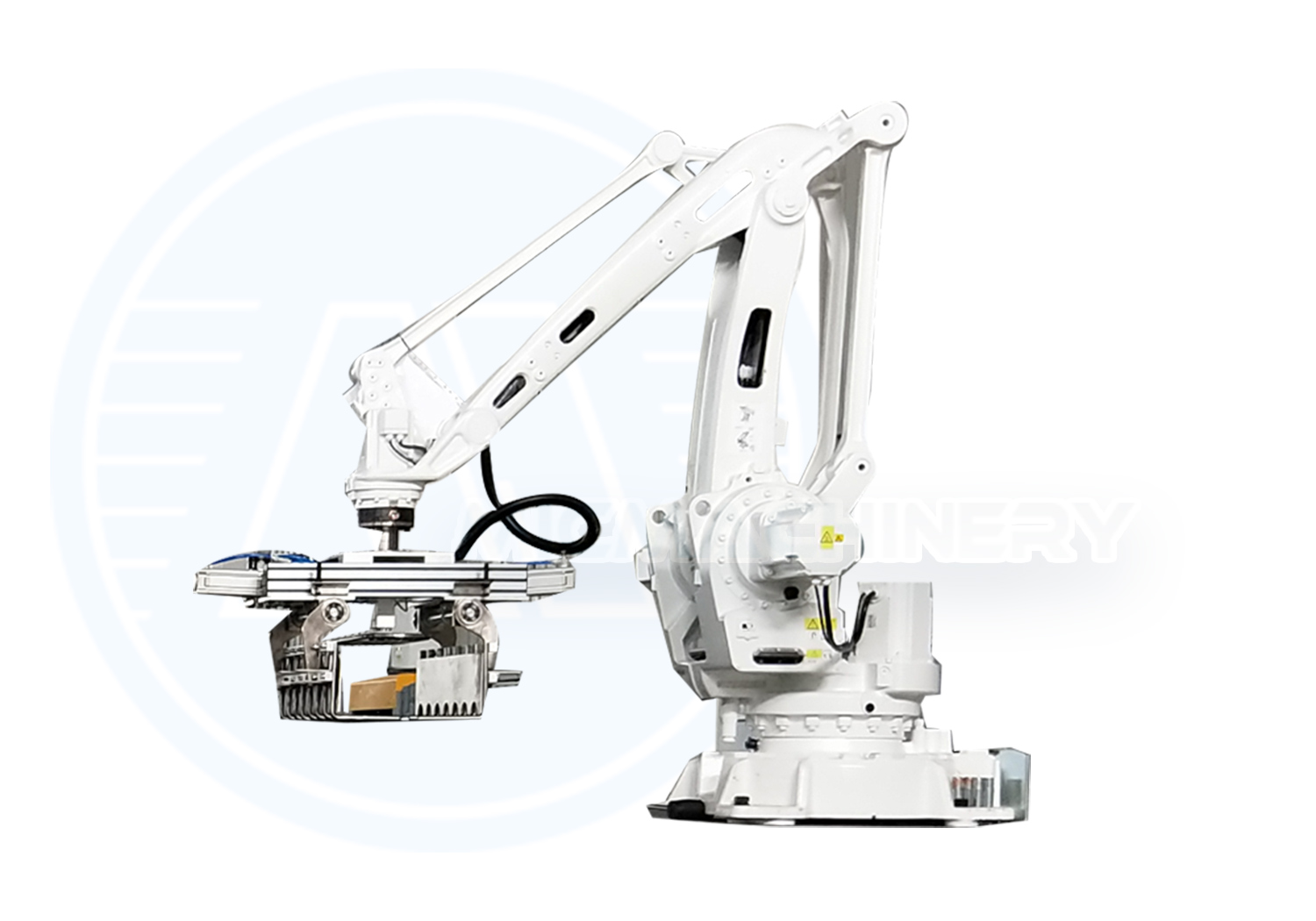
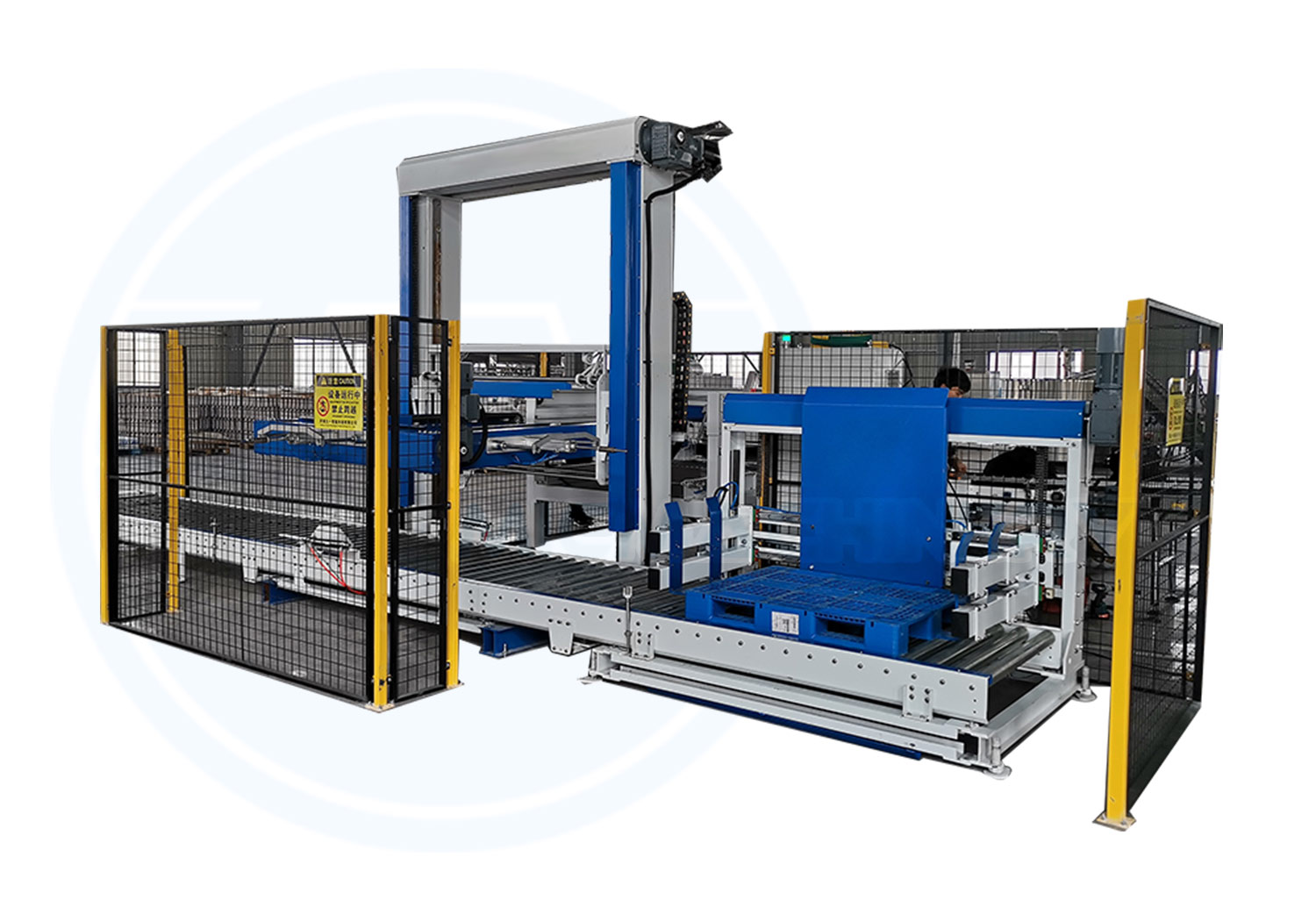
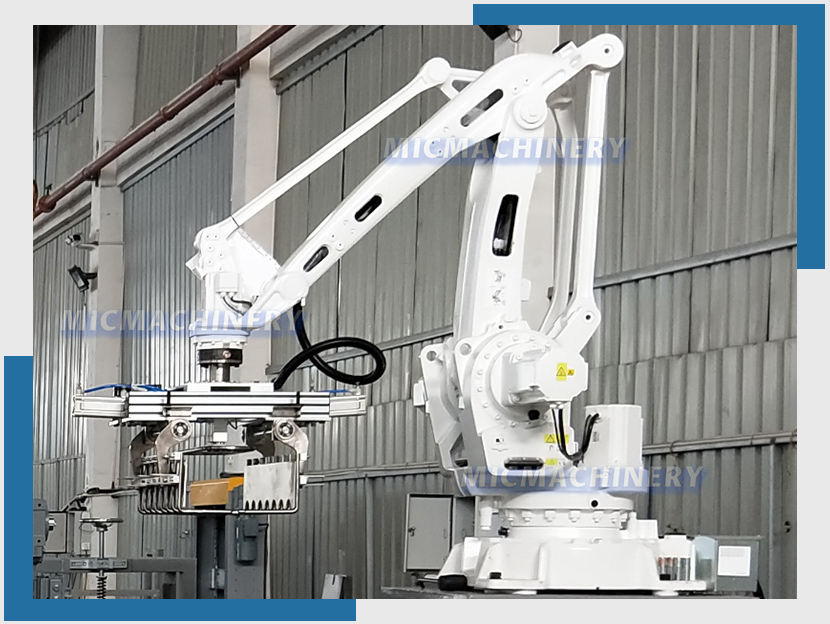
Customization options include robotic palletizing arms, automatic conveyors, different gripping tools, pallet feeding systems, safety fences, and integration with existing packaging lines. For adhesive manufacturers handling various products, palletizing programs can be adjusted for different carton sizes and stacking patterns.
The system structure, control configuration, and automation level can be modified according to specific production conditions, helping customers achieve efficient material handling within their existing workflow.
FAQ
What products can a palletizer handle?
A palletizer can handle various adhesive packaging products, including cartons, buckets, drums, cartridges, and other containers. The suitable gripping system depends on product shape, weight, and packaging type.
What is the working process of a palletizer?
The palletizer receives packaged products through a conveyor system, positions them according to preset patterns, and places them onto pallets automatically. After completing the stacking process, pallets can be transferred for storage or transportation.
What is the difference between a robotic palletizer and a conventional palletizer?
A robotic palletizer uses a programmable robotic arm for flexible product handling and stacking, while conventional palletizers usually use fixed mechanical structures designed for specific packaging formats.
Can the palletizer be integrated with an adhesive production line?
Yes. A palletizer can be connected with filling machines, carton packing machines, conveyors, and other packaging equipment to create an automated adhesive production and packaging system.
How can palletizing accuracy be maintained?
Proper product positioning, regular equipment maintenance, and optimized control parameters help maintain accurate stacking performance. The system can also be adjusted according to different pallet patterns and product specifications.