Vertical Sand Mill for Adhesive Production
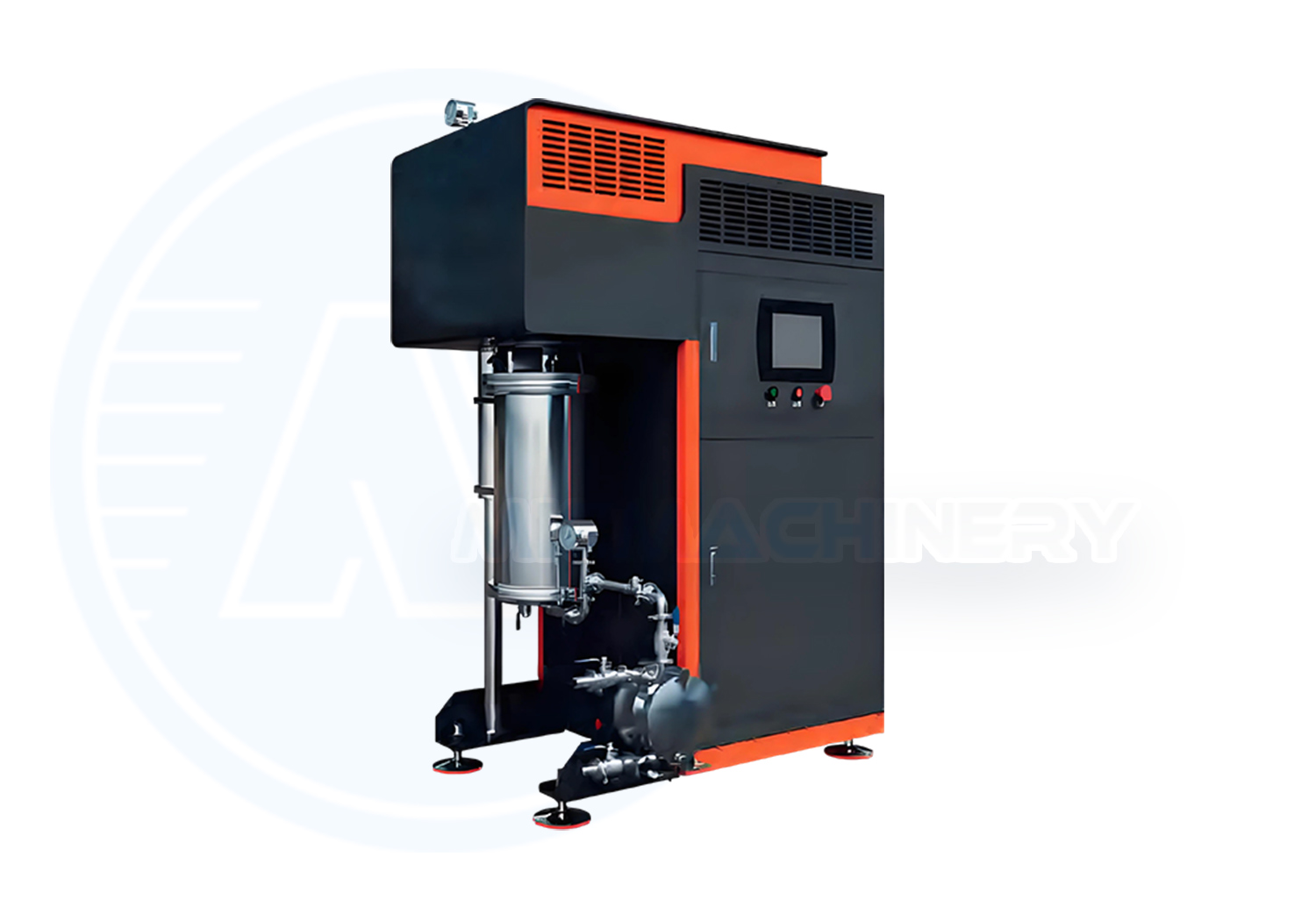
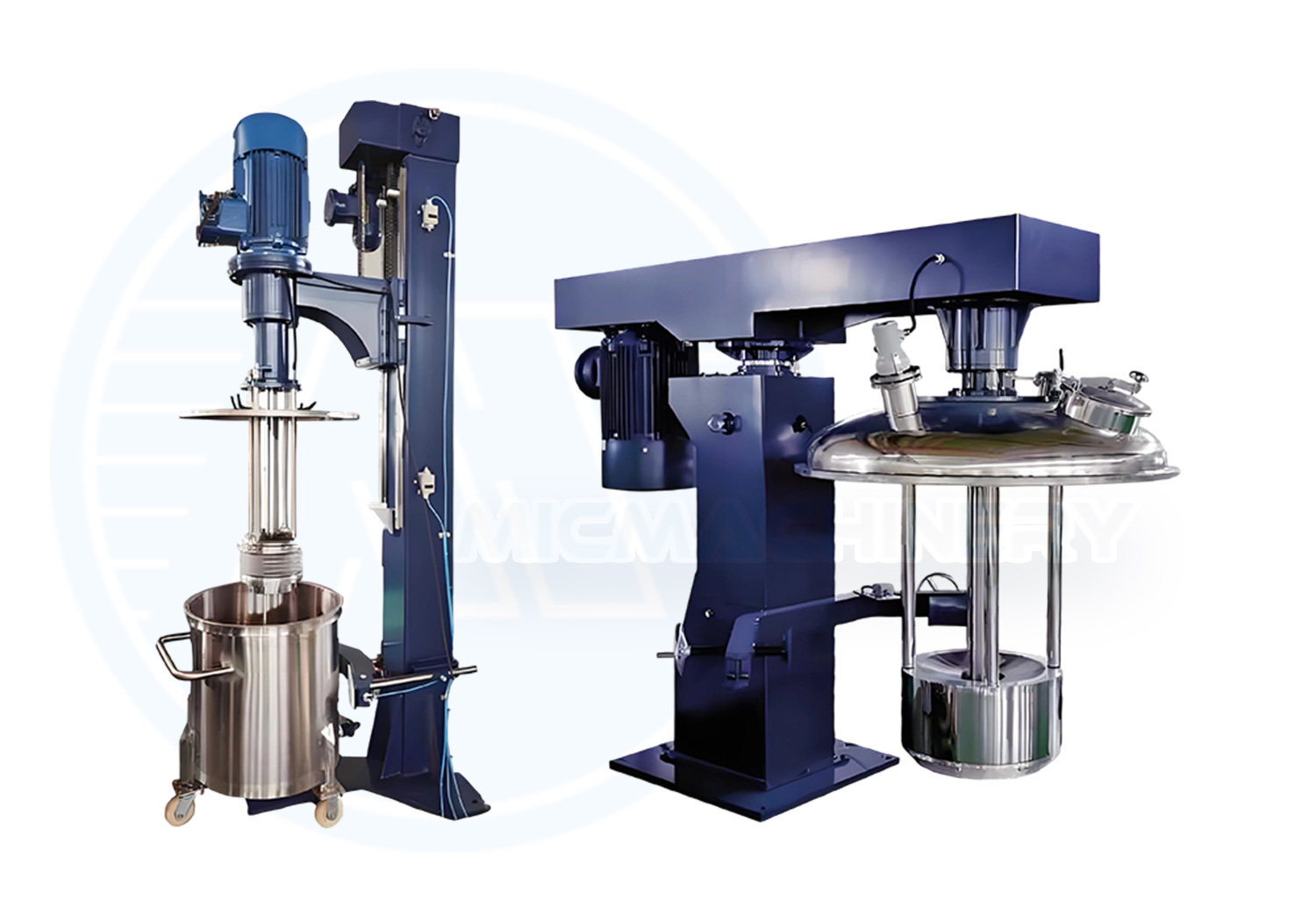
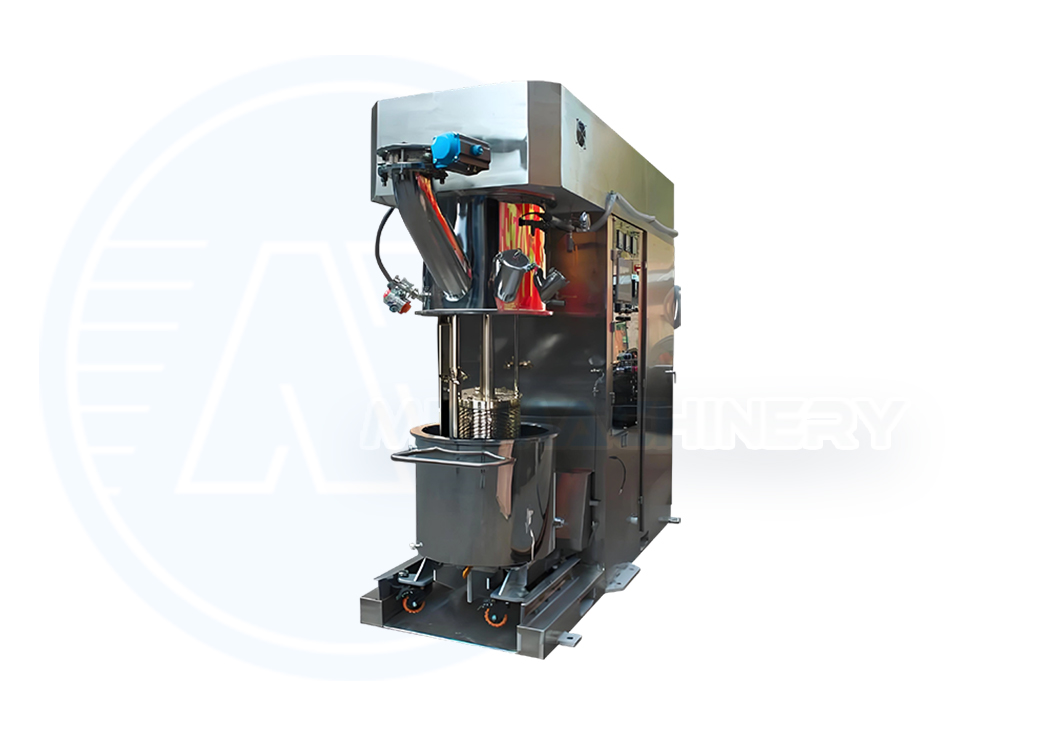
A Vertical Sand Mill is an important grinding and dispersion machine used in adhesive, coating, ink, and chemical manufacturing. It uses high-speed rotating grinding media to reduce particle size and improve the uniform distribution of fillers, pigments, and additives. MIC Machinery provides vertical grinding solutions for adhesive applications such as epoxy adhesives, polyurethane systems, sealants, and other industrial materials requiring stable dispersion and controlled fineness.
Manufacturing Process of Vertical Sand Mill
The manufacturing process of a vertical sand mill mainly includes material feeding, grinding and dispersion, temperature control, and discharge.
| |
|
|
| |
1)Material Feeding
The pre-mixed adhesive material is transferred into the grinding chamber through a feeding system. The feeding speed is adjusted according to material viscosity, formulation characteristics, and required grinding performance. Stable feeding ensures consistent contact between the material and grinding media during operation.
-----
2)Grinding and Dispersion
Inside the vertical grinding chamber, the rotating shaft drives the grinding media to generate impact, shear, and friction forces, breaking down agglomerates and improving filler dispersion. Grinding performance depends on factors such as media size, filling ratio, rotor speed, viscosity, and processing time to achieve the desired fineness while preserving adhesive properties.
-----
3)Temperature Control
During grinding, mechanical energy can generate heat, which may influence adhesive viscosity and stability. A cooling jacket around the grinding chamber helps remove heat through circulating cooling water, maintaining suitable processing temperatures for temperature-sensitive formulations.
-----
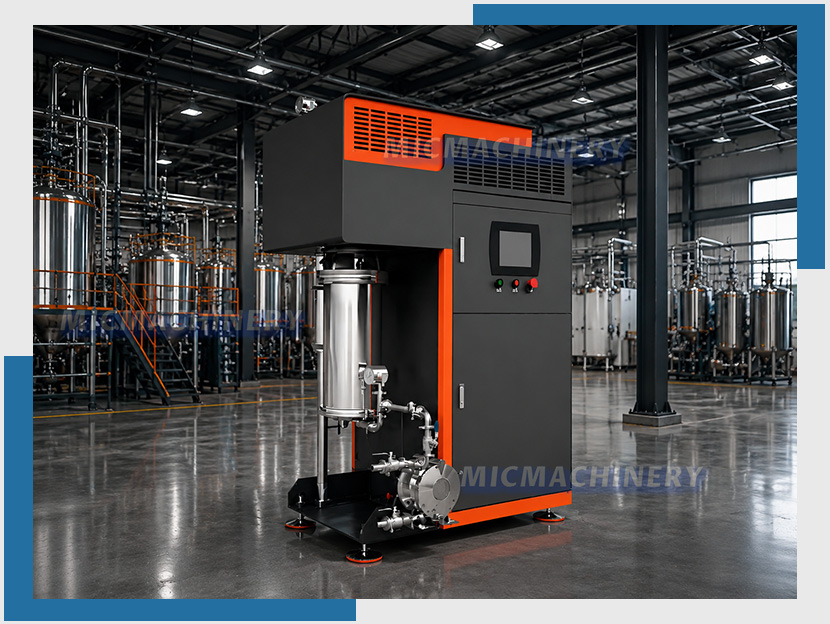
4)Material Discharge
After reaching the required dispersion level, the processed material is discharged through a separation system. The system allows the finished adhesive to flow out while retaining the grinding media inside the chamber, ensuring continuous and stable operation.
|
|
| |
|
|
Technical Advantages of Vertical Sand Mill
➢ Efficient Grinding and Dispersion Performance
The vertical structure enables efficient circulation of materials and grinding media inside the chamber. Continuous interaction between the adhesive compound and grinding media improves particle size reduction and ensures uniform dispersion, helping manufacturers achieve smoother texture, stable viscosity, enhanced application performance, and consistent product quality.
➢ ESuitable for Various Adhesive Materials
Vertical sand mills are widely used for processing medium- to high-viscosity materials that require fine grinding and homogeneous mixing. Typical applications include silicone sealants, epoxy adhesives, polyurethane adhesives, construction adhesives, industrial bonding materials, and pigmented adhesive systems. The equipment can effectively process formulations containing fillers, pigments, and functional additives that require strong dispersion forces to achieve consistent quality and stable performance.
➢ Stable and Controlled Production
A closed grinding system reduces the risk of external contamination during processing and provides better control over production conditions. By adjusting parameters such as rotor speed, feeding rate, and grinding time, manufacturers can achieve repeatable results between production batches. This is especially important for adhesive products, as variations in particle size or dispersion quality can directly affect bonding strength, curing performance, and application consistency.
➢ Flexible Processing Capability
The vertical chamber design provides flexibility for different production scales, from laboratory testing and pilot production to industrial manufacturing, depending on chamber volume and configuration. Manufacturers can use the same processing principle to evaluate new adhesive formulations, optimize grinding parameters, and expand production capacity efficiently.
➢ Reliable Temperature Management
Adhesive materials often contain heat-sensitive components that require precise temperature control. The cooling system of a vertical sand mill removes heat generated during grinding, maintaining stable operating conditions and preventing excessive temperature increases that may cause viscosity changes, premature reactions, or reduced product performance.
➢ Easy Operation and Maintenance
The vertical structure provides convenient access to key components for inspection, cleaning, and maintenance. Wear parts such as grinding media and separation components can be replaced according to production conditions, helping reduce downtime and maintain stable operation. A vertical sand mill can also be integrated with other adhesive production equipment, including planetary mixers, vacuum mixing systems, storage tanks, transfer pumps, and filling equipment, enabling manufacturers to build efficient workflows from raw material preparation to final packaging.
Customization Options
Different adhesive formulations require different grinding conditions. MIC Machinery provides customized vertical sand mill configurations based on material properties, production requirements, and factory conditions.
Customization options include grinding chamber size, contact material selection, grinding media type, motor power, and cooling system design. Equipment parameters can be adjusted according to viscosity, required fineness, production volume, and temperature sensitivity.
For complete adhesive production projects, MIC Machinery can also provide integrated solutions combining mixing, grinding, storage, and filling processes, helping customers optimize equipment layout and production efficiency.
FAQ
| What is a vertical sand mill used for? |
|
A vertical sand mill is used for grinding and dispersing materials in adhesive, coating, ink, and chemical industries. It improves particle size distribution and helps achieve uniform dispersion of fillers, pigments, and additives.
|
| |
| What adhesives can be processed with a vertical sand mill? |
| Vertical sand mills can process various adhesive materials, including epoxy adhesives, polyurethane adhesives, silicone sealants, construction adhesives, and other industrial bonding compounds. |
| |
| What factors affect the grinding performance of a vertical sand mill? |
| Grinding performance is affected by grinding media size, filling ratio, rotor speed, material viscosity, processing time, cooling efficiency, and formulation characteristics. |
| |
| How do I choose the right vertical sand mill for adhesive production? |
| Selection should consider adhesive viscosity, required particle size, production capacity, material properties, temperature sensitivity, and continuous production requirements. The equipment should be matched with the complete manufacturing process rather than capacity alone. |
| |
| Can MIC Machinery customize a vertical sand mill for specific adhesive formulations? |
| Yes. MIC Machinery provides customized grinding solutions based on customer formulations, production goals, and process requirements, including equipment configuration, cooling systems, and production line integration. |