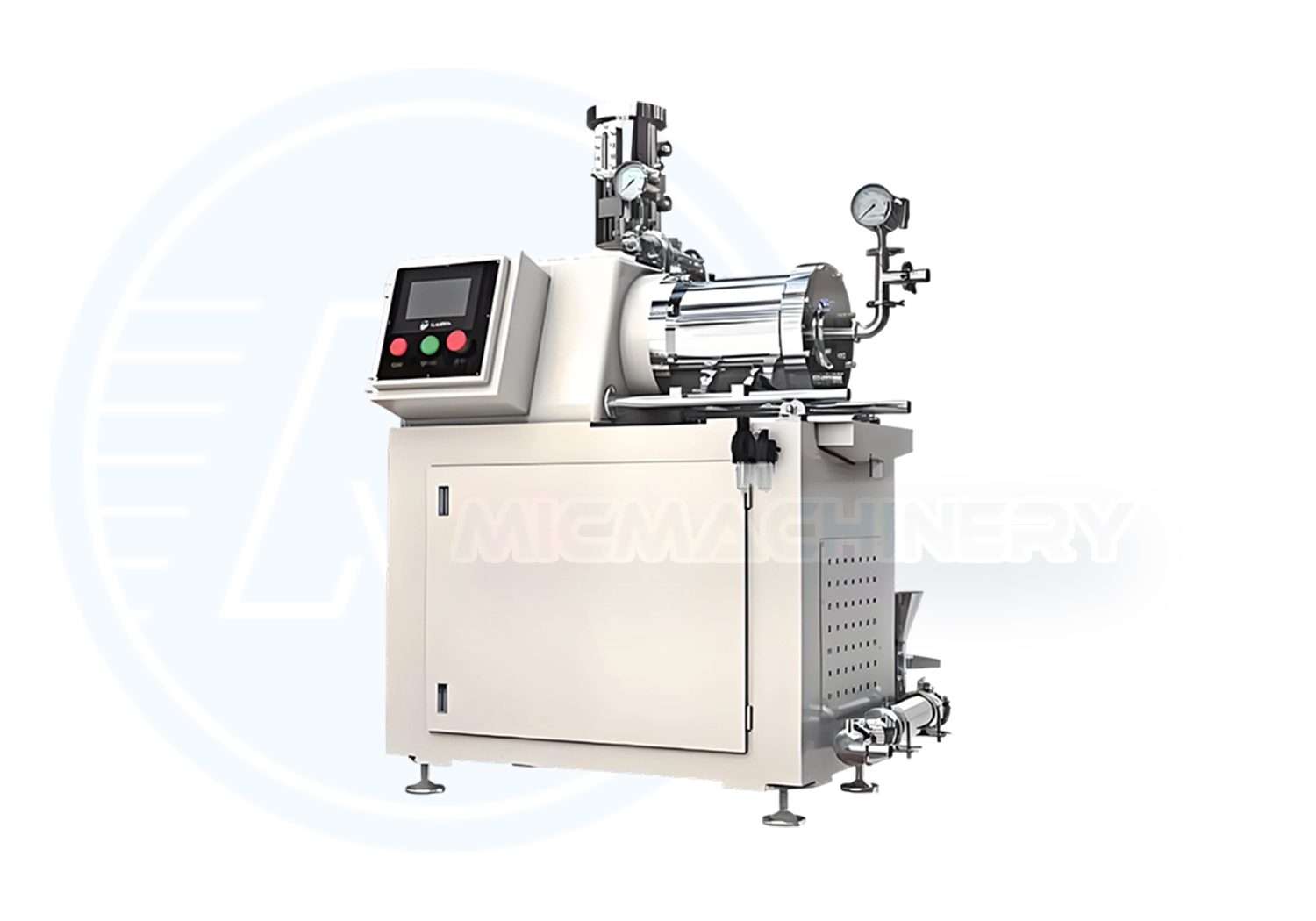
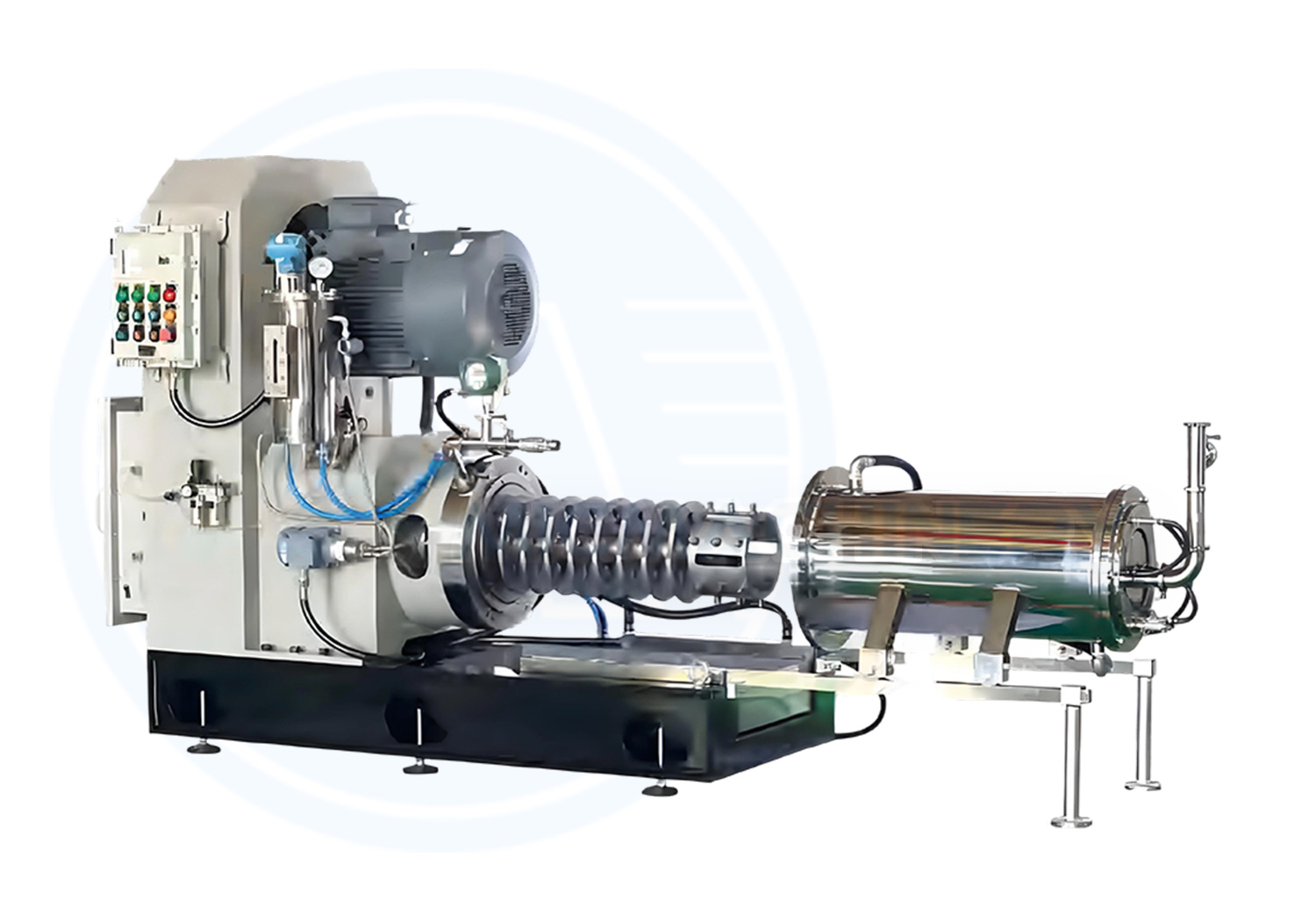
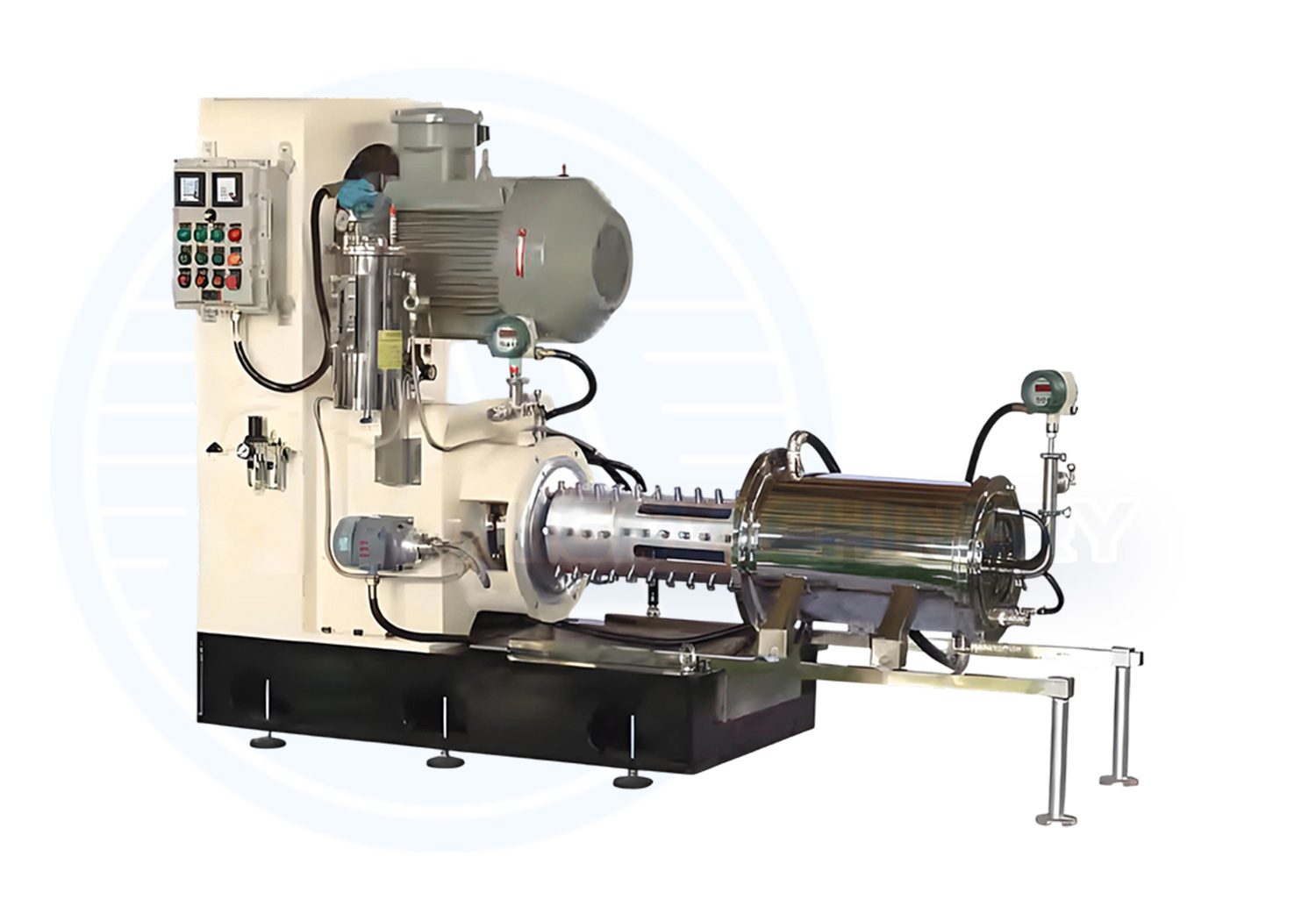
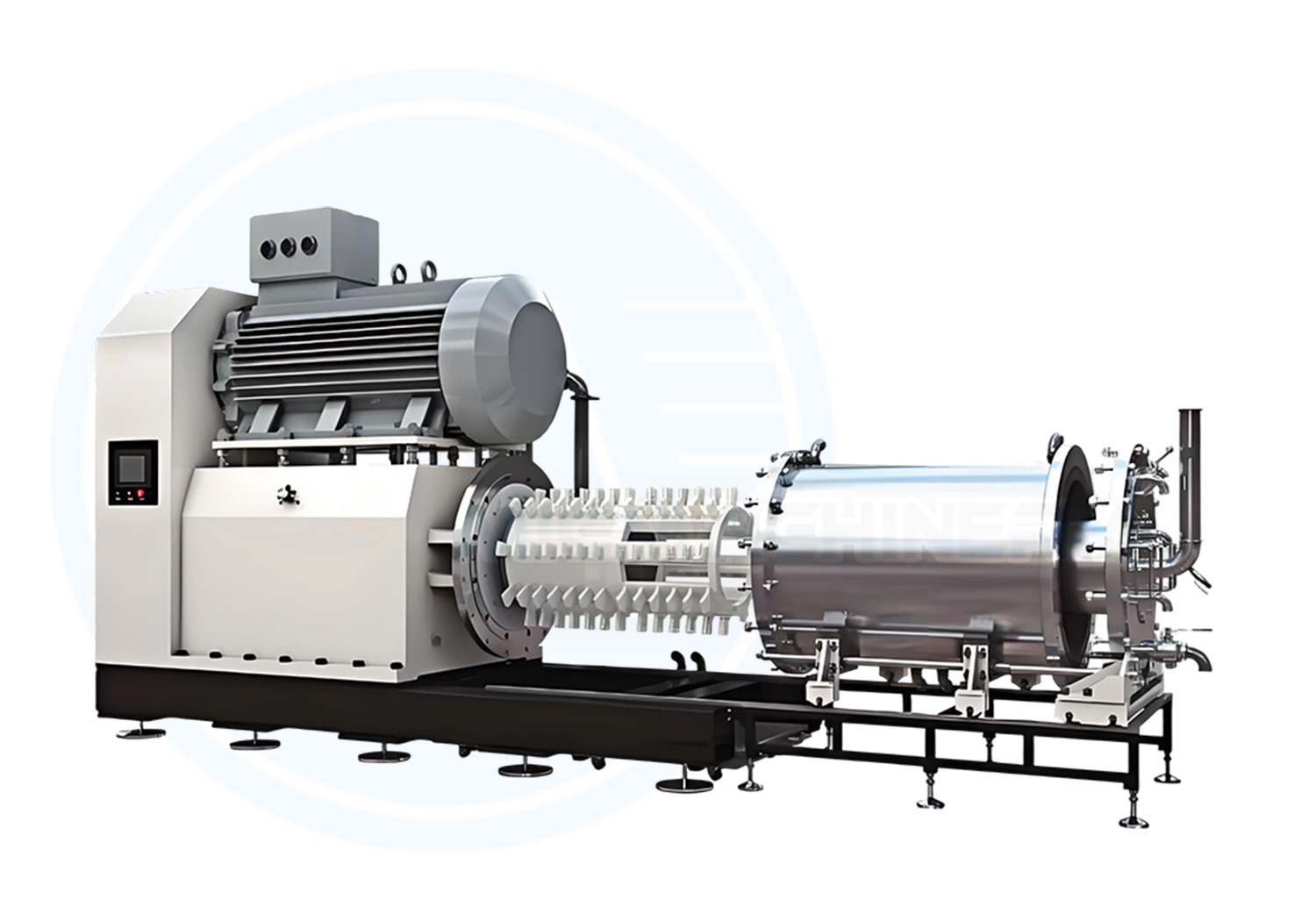
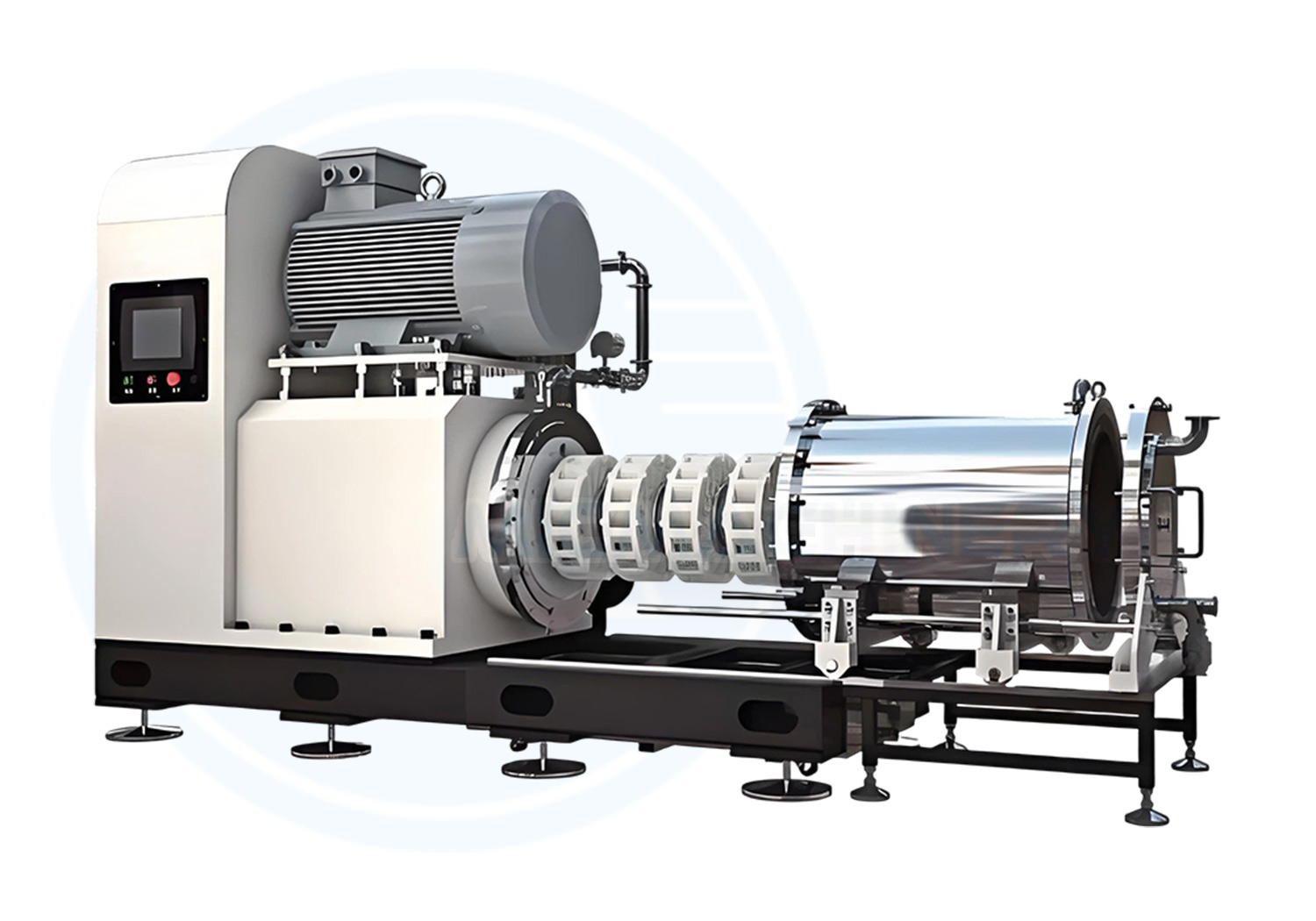
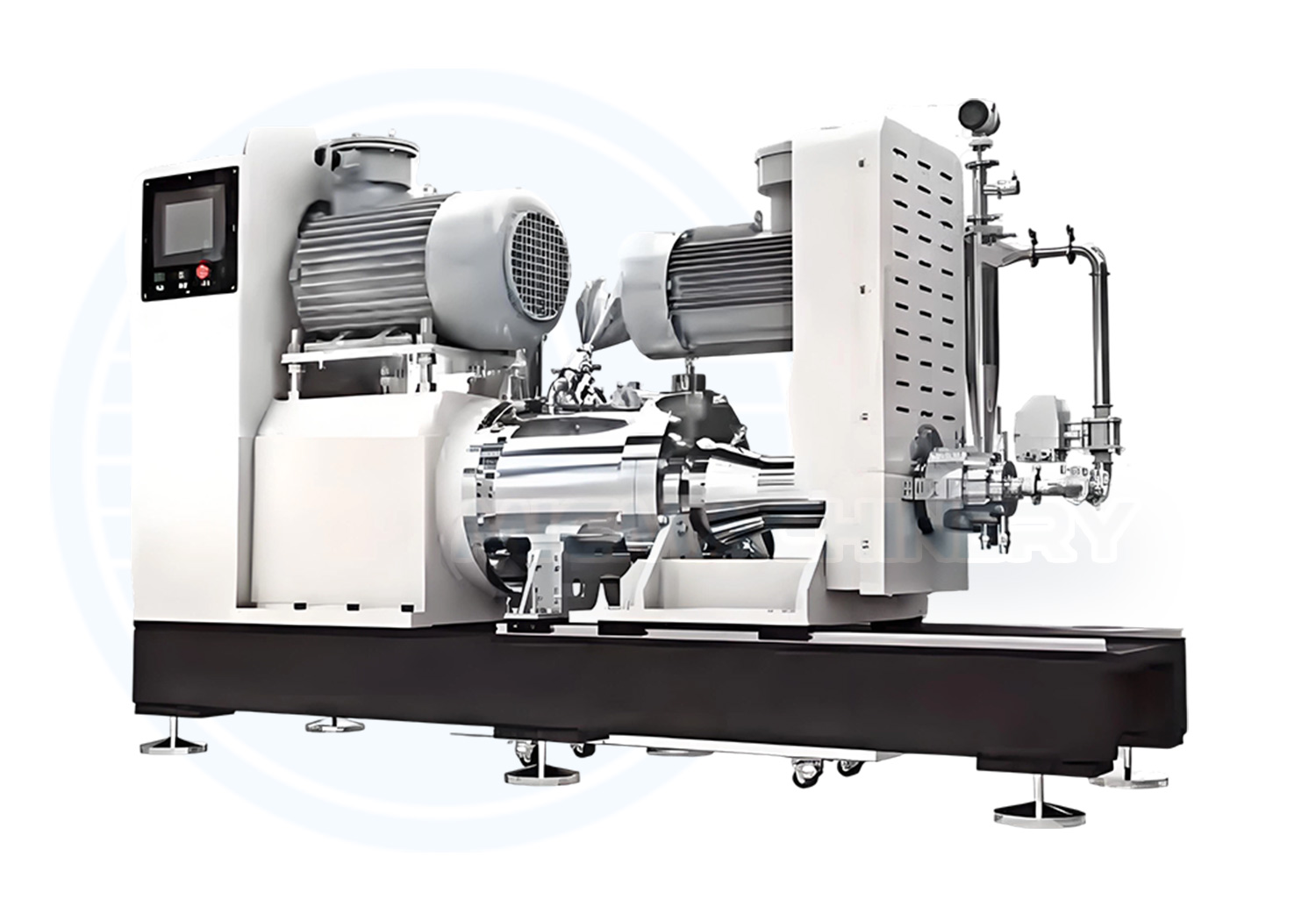
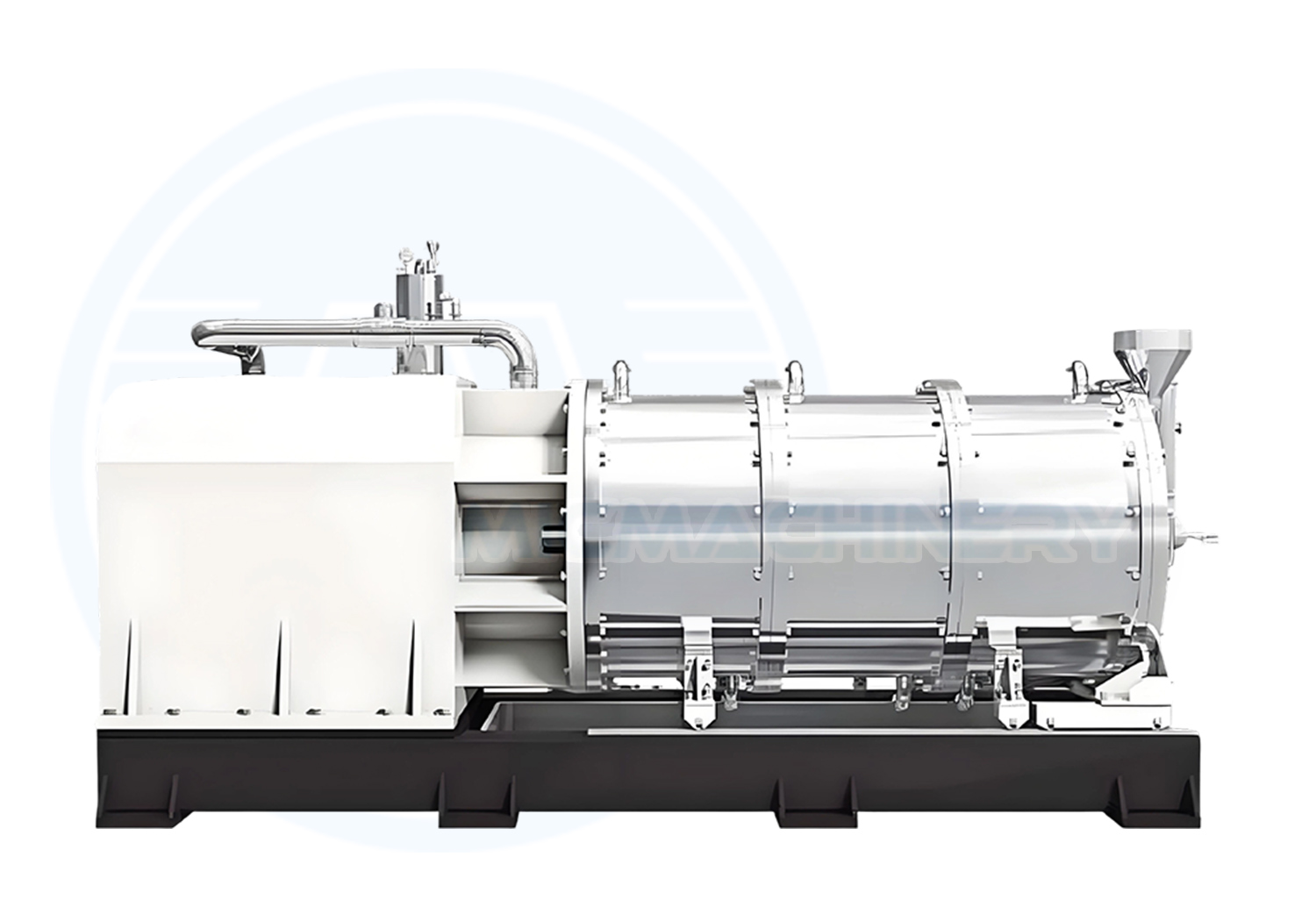
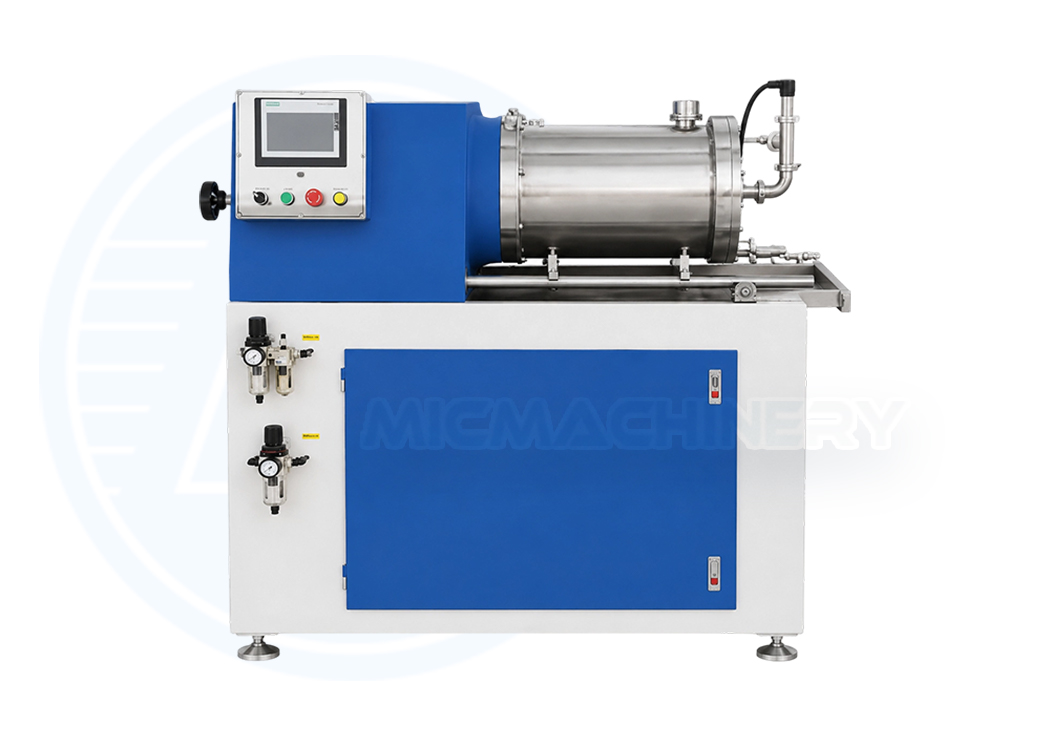
Horizontal Sand Mill for Adhesive Production
A Horizontal Sand Mill is widely used in adhesive, sealant, coating, and chemical production for efficient grinding and dispersion. By using high-speed rotating grinding media, it reduces particle size, improves material uniformity, and enhances adhesive stability. MIC Machinery provides customized grinding solutions for silicone, epoxy, polyurethane adhesives, and other high-viscosity materials.
Manufacturing Process of Horizontal Sand Mill
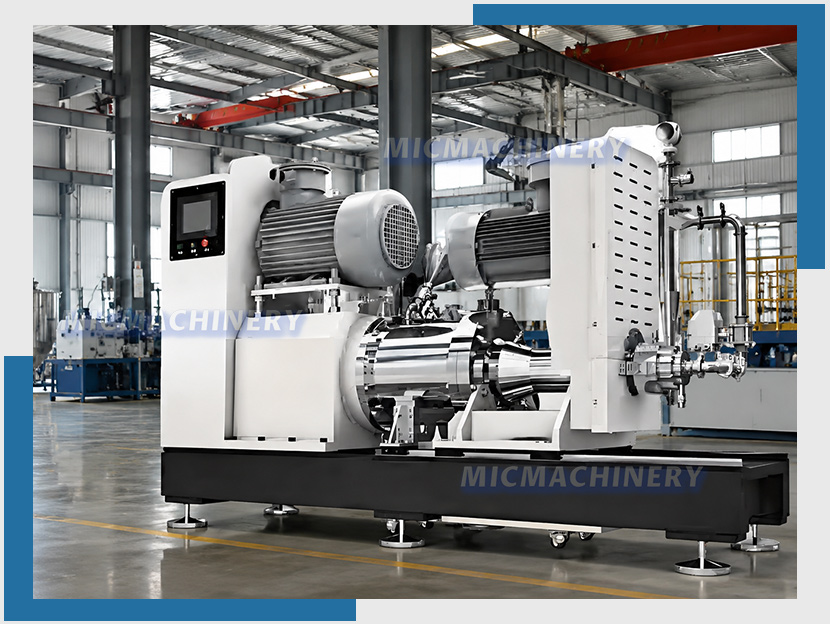
The working process of a horizontal sand mill mainly includes feeding, grinding, dispersion, cooling, and discharge stages.
|
|
|
|
|
|
1)Material Feeding
Before grinding, adhesive materials are pre-mixed and transferred into the grinding chamber through a feeding pump. The feeding speed is adjusted according to material viscosity, formulation characteristics, and required particle size. Stable feeding is essential for processing high-viscosity adhesives and sealants containing fillers or sensitive additives.
-----
2)High-Energy Grinding and Dispersion
Inside the horizontal grinding chamber, the rotor drives grinding media at high speed, generating impact, shear, and friction forces. These forces break down agglomerated particles and improve the dispersion of fillers, pigments, and additives, producing a smoother and more uniform adhesive compound. Grinding performance depends on factors such as media size, filling ratio, rotor speed, viscosity, and residence time.
-----
3)Temperature Control
During grinding, friction can generate heat that may affect adhesive viscosity and stability. The cooling jacket around the grinding chamber removes excess heat through circulating water, maintaining stable processing conditions.
-----
4)Continuous Discharge
After reaching the required fineness, the processed material is discharged through a separation system that keeps the grinding media inside the chamber. The finished adhesive can then be transferred to storage tanks, filling systems, or further processing equipment.
|
|
|
|
|
|
Technical Advantages of Horizontal Sand Mill
➢ Efficient Particle Size Reduction
The horizontal grinding structure ensures continuous contact between the material and grinding media, improving grinding efficiency and achieving a more uniform particle size distribution. For adhesive production, this helps enhance product smoothness, application performance, and long-term storage stability.
➢ Suitable for High-Viscosity Materials
Adhesives and sealants often require strong shear and dispersion forces due to their high viscosity and complex formulations. The optimized grinding chamber design and powerful rotor system enable the equipment to process materials such as silicone sealants, polyurethane adhesives, epoxy resin systems, construction adhesives, and industrial bonding materials.
➢ Stable Production Quality
The closed grinding chamber provides a controlled processing environment and reduces the risk of contamination. Continuous operation and precise parameter adjustment help maintain consistent product quality and ensure stable formulation performance during large-scale production.
➢ Improved Energy Utilization
The horizontal chamber design improves the interaction between grinding media and material flow, allowing more efficient energy transfer during grinding. This reduces unnecessary energy consumption while maintaining effective dispersion performance.
➢ Easy Integration Into Production Lines
A horizontal sand mill can be integrated with other adhesive production equipment, including planetary mixers, vacuum mixing systems, storage tanks, pumping systems, and automatic filling machines. This makes it suitable for complete production lines requiring continuous material processing and reliable operation.
Customization Options
Every adhesive formulation has unique processing requirements. MIC Machinery provides customized Horizontal Sand Mill solutions based on material properties, production capacity, and factory layout.
Customization options may include:
· Grinding Chamber Configuration
· Grinding Media Selection
· Motor Power and Capacity
· Cooling System Design
· Production Line Integration
MIC Machinery can provide complete adhesive production solutions, integrating grinding with mixing, storage, and filling processes for efficient workflow and reliable operation.
FAQ
|
What materials can be processed by a horizontal sand mill?
|
|
A horizontal sand mill is widely used for processing adhesives, sealants, coatings, inks, pigments, and other chemical materials requiring fine grinding and dispersion. In adhesive production, it is commonly used for silicone, epoxy, polyurethane, and industrial bonding formulations.
|
| |
|
What is the difference between a horizontal sand mill and a vertical sand mill?
|
|
The main difference is the chamber orientation and material flow direction. A horizontal sand mill generally provides better grinding efficiency, more stable material circulation, and easier continuous operation, especially for high-viscosity products.
|
| |
|
How does a horizontal sand mill improve adhesive quality?
|
| The equipment improves adhesive quality by reducing particle size, eliminating agglomerates, and ensuring uniform dispersion of fillers and additives. This helps achieve consistent viscosity, smooth texture, and reliable bonding performance. |
| |
|
How should a horizontal sand mill be selected for adhesive production?
|
|
Selection of a suitable Horizontal Sand Mill depends on adhesive viscosity, required particle size, production capacity, material characteristics, temperature sensitivity, and continuous production requirements, with the final configuration determined by the complete manufacturing process rather than equipment capacity alone.
|
| |
|
Can MIC Machinery customize a horizontal sand mill for specific adhesive formulations?
|
|
Yes. MIC Machinery provides customized grinding solutions based on customers’ formulations, production goals, and factory conditions. Engineering teams can assist with equipment selection, process design, and production line integration.
|