
Which Vertical Kneader Is Best for Silicone Rubber?

Silicone rubber manufacturing requires consistent filler dispersion, controlled material temperature, and stable compound quality. Choosing the right vertical kneader for silicone rubber depends on the rubber formulation, viscosity, filler loading, batch capacity, and production process. For manufacturers processing high-consistency silicone rubber (HCR), a customized vertical kneader can provide the mechanical force needed for uniform kneading and reliable batch production.
Why Is a Vertical Kneader Suitable for Silicone Rubber?
Silicone rubber compounds often contain silicone polymers, reinforcing fillers, pigments, and functional additives. Materials with high filler content can become highly viscous and difficult to process using conventional agitators.
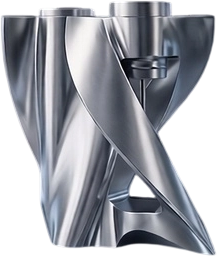
A vertical kneader uses powerful compression, shearing, and folding forces to distribute ingredients throughout the compound. Its kneading action helps break down filler agglomerates and improve material consistency.
|
Key advantages include: - Strong kneading capability: Handles high-viscosity and high-solid-content formulations. - Uniform filler dispersion: Helps distribute silica, pigments, and additives. - Temperature control: Optional heating or cooling jackets help maintain suitable processing conditions. - Flexible production: Mixing speed and processing time can be adjusted for different formulations. |
 |
Which Vertical Kneader Configuration Should You Choose?
|
Selection Factor |
Recommended Configuration |
Production Benefit |
|
High-viscosity compound |
Heavy-duty kneading system |
Provides sufficient mechanical force |
|
High silica content |
Suitable blade geometry and motor power |
Improves filler distribution |
|
Temperature-sensitive formulation |
Heating/cooling jacket |
Controls processing temperature |
|
Air-sensitive compound |
Vacuum configuration |
Supports air removal |
|
Large batch production |
Customized chamber volume |
Matches production capacity |
|
Highly viscous finished compound |
Suitable discharge system |
Improves material transfer |
Important: Motor power, blade geometry, and chamber volume should be selected together. Increasing motor power alone does not guarantee better mixing performance.
Vertical Kneader vs. Conventional Mixer for Silicone Rubber
|
Comparison |
Vertical Kneader |
Conventional Agitator |
|
Material viscosity |
High |
Low to medium |
|
Mixing mechanism |
Compression, shearing, folding |
Mainly agitation |
|
High filler loading |
More suitable |
May require additional processing |
|
Dispersion |
Intensive kneading |
Depends on agitator design |
|
Application |
Silicone rubber compounds |
Flowable liquid materials |
For high-consistency silicone rubber, a dedicated silicone rubber kneading machine is generally more appropriate than a conventional low-viscosity agitator. However, liquid silicone rubber (LSR) and lower-viscosity formulations may require different mixing technologies.
How Does the Silicone Rubber Kneading Process Work?
A typical silicone rubber kneading process involves four stages:
1)Raw Material Feeding: Load silicone polymers, reinforcing fillers, pigments, and additives according to the formulation and feeding sequence.
2)Initial Mixing: Start the kneading system to distribute the polymer and incorporate the ingredients gradually.
3)Intensive Kneading: Apply compression, shearing, and folding forces to improve filler wetting and dispersion. Monitor temperature and motor load.
4)Discharge: Discharge the finished compound using a suitable discharge arrangement for the material's viscosity and downstream process.

Process tip: Add reinforcing fillers progressively rather than introducing the entire quantity at once. This helps reduce localized powder accumulation and improves incorporation.
When Do You Need a Vacuum Vertical Kneader?
A vacuum vertical kneader is worth considering when trapped air affects compound quality or downstream processing.
- Vacuum operation can help:
- Remove entrained air during kneading.
- Reduce visible air pockets in the finished compound.
- Improve compound consistency before subsequent molding or extrusion.
- Support processing of formulations that are difficult to deaerate under atmospheric conditions.
Vacuum level and processing time should be established through formulation trials. Vacuum operation cannot compensate for inadequate filler wetting or poor mixing conditions.
How to Select the Right Vertical Kneader for Your Factory
Before purchasing equipment, evaluate these practical requirements:
- Material properties: Polymer type, viscosity, filler percentage, and formulation sensitivity.
- Batch capacity: Required output per batch and daily production target.
- Mixing performance: Required dispersion uniformity and acceptable temperature rise.
- Machine configuration: Blade design, motor power, contact materials, and chamber volume.
- Auxiliary systems: Heating/cooling, vacuum, feeding, and discharge arrangements.
- Factory integration: Available floor space, electrical supply, and downstream equipment.
MIC Machinery provides customized vertical kneader configurations for high-viscosity adhesives, sealants, rubber compounds, and other chemical materials. Options include customized chamber volume, blade design, contact materials, motor power, heating/cooling systems, vacuum configuration, and discharge methods.
FAQ
| Q1:What materials can be used for the kneader's contact surfaces? |
Stainless steel and other suitable material options can be evaluated according to chemical compatibility, wear resistance, and cleaning requirements.
| Q2:How can operators verify mixing uniformity? |
Check compound samples from different batch locations and compare filler distribution, appearance, consistency, and relevant laboratory test results.
| Q3:What should be checked before commissioning? |
Verify electrical connections, motor rotation, safety interlocks, lubrication, temperature-control functions, and vacuum sealing if equipped.
| Q4:How often should kneading blades be inspected? |
Inspection frequency depends on operating hours, filler abrasiveness, and production conditions. Check for wear, deformation, and material buildup during scheduled maintenance.
| Q5:Can the machine be integrated with an existing silicone production line? |
Yes. Feeding systems, storage tanks, transfer equipment, and downstream processing or filling equipment can be considered during system integration.
Conclusion
The best vertical kneader for silicone rubber depends on formulation viscosity, filler loading, batch size, and production requirements. Temperature control, vacuum capability, and discharge design should be evaluated according to actual process conditions. MIC Machinery can customize equipment configurations to match different silicone rubber manufacturing requirements.
